
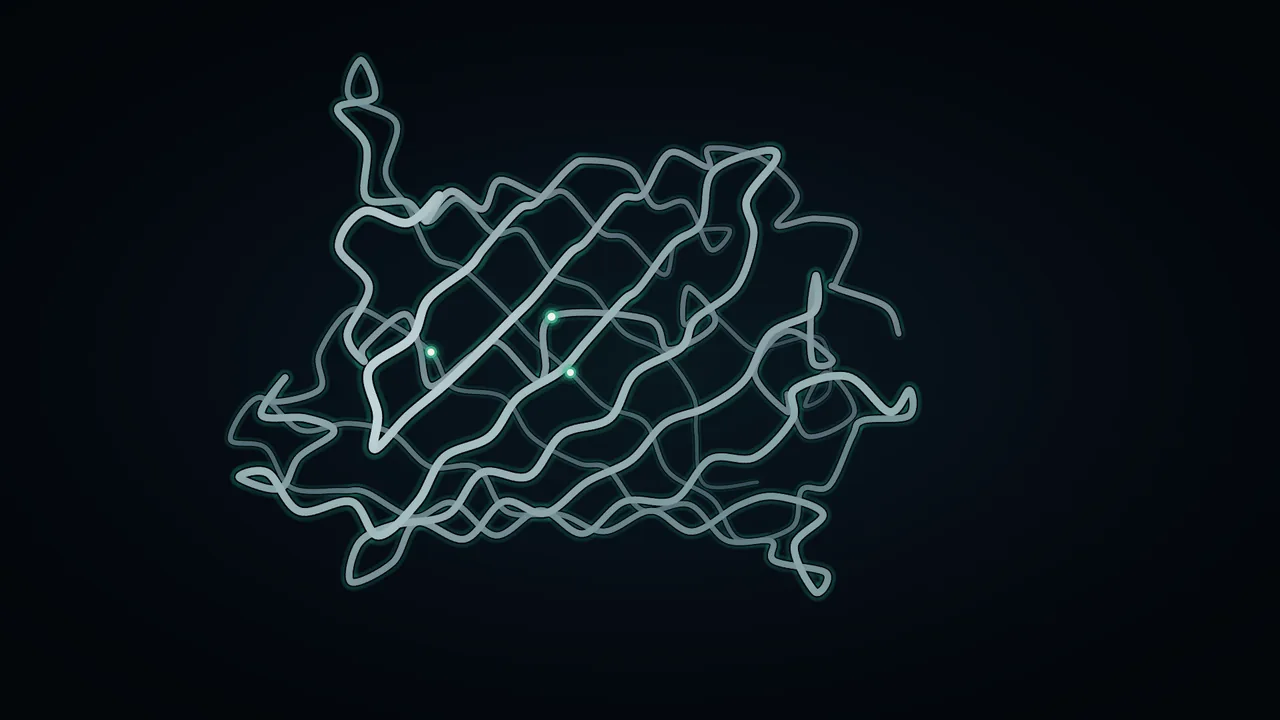
Directed evolution services
Directed evolution CRO services for protein optimization: iterative mutagenesis library construction, yeast and mammalian display screening, and NGS-resolved variant selection for binding, stability, and catalytic activity
Start a project →The debate is mostly over. The two approaches became one loop.
For years the field framed directed evolution and rational design as opposites. Directed evolution needs no structure and no model: you mutate broadly and let selection find what works. Rational and AI design go the other way, using structure and data to predict the mutations worth making. Posed as a contest, neither wins outright. Pure selection wastes most of the library on dead variants, and pure prediction is only ever as good as the data behind the model.
In practice the strong approach is the loop. A model trained on your own selection data proposes where to diversify next, the laboratory round returns a real fitness measurement on thousands of variants, and those measurements retrain the model. Each round is both an experiment and a training set. This is machine-learning-guided directed evolution, and it is how we think a modern campaign should run whenever there is data to learn from.
The exception is the cold start. When you have no selection results yet and no model that captures the property, prediction has nothing to stand on, and classical directed evolution is still the fastest way to a real answer. We pick the entry point honestly and match the method to the problem, not the other way around.
What directed evolution is
Directed evolution applies the principles of natural selection in the laboratory. You start with a protein that partially meets your requirements: it binds the target, but weakly; it catalyzes the reaction, but slowly; it expresses, but poorly. Then you introduce diversity, apply selection pressure, and recover improved variants.
The process is iterative. Each round of mutagenesis and selection generates a population enriched for variants with improved performance. Over multiple rounds, the protein accumulates mutations that collectively shift its properties toward your specification.
At Ranomics, we screen high-diversity mutagenesis libraries (10^7-10^8 variants) using display platforms, functional enzyme assays, or custom reporter systems, all coupled to next-generation sequencing. Every variant in the library is tracked quantitatively across selection rounds, giving you enrichment data at single-sequence resolution rather than qualitative colony-picking results.
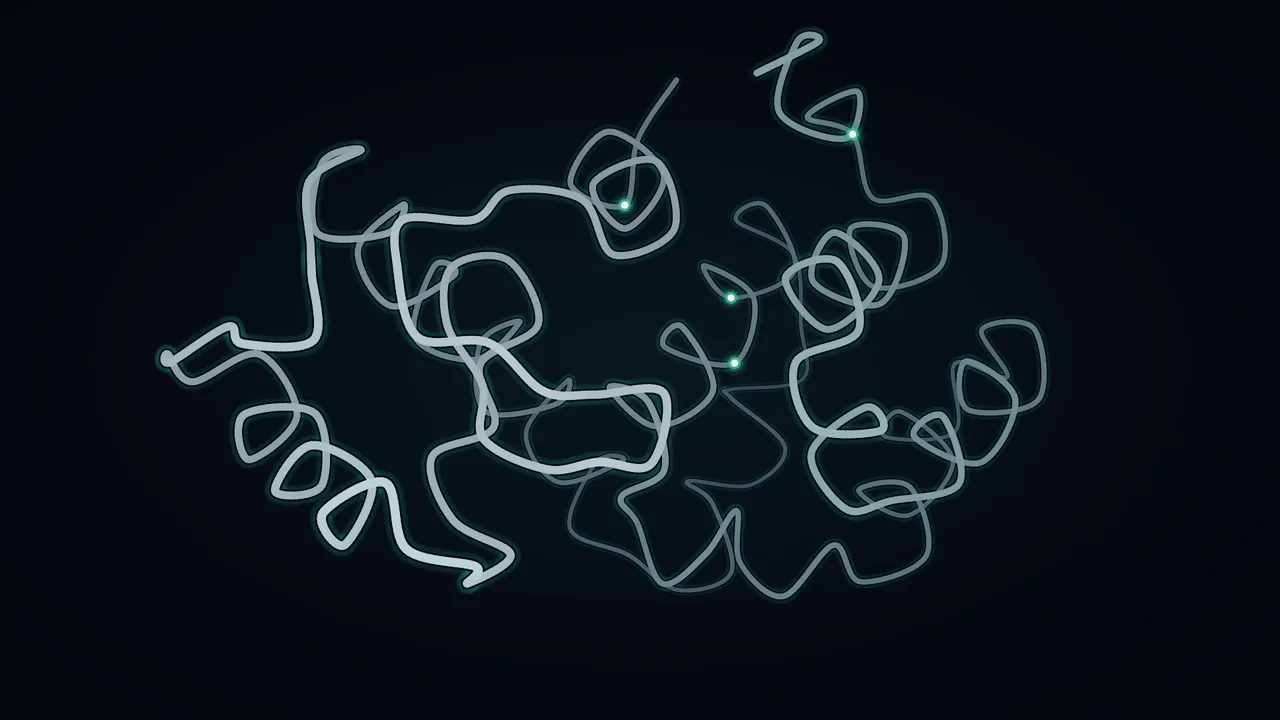
Random and focused mutagenesis, matched to your protein
Random mutagenesis
Error-prone PCR introduces random point mutations across the entire gene. The mutation rate is tuned to introduce 1-5 amino acid substitutions per variant, balancing diversity against the probability of catastrophic mutations. This is the standard starting point when you have no structural data to guide library design.
Focused mutagenesis
Site-saturation mutagenesis, combinatorial scanning, and degenerate codon libraries concentrate diversity at positions identified by structure, deep mutational scanning data, or prior evolution rounds. This approach explores the sequence space where improvements are most likely to reside.
High-throughput screening by display and functional assay
The mutagenesis library is screened using the selection system matched to your functional requirement. Display-based selection for binding; reporter-based selection for activity; growth-based selection for fitness. For antibody campaigns, display-based selection under increasing stringency is how we run affinity maturation.
Yeast surface display
FACS/MACS selection against labelled target. Quantitative enrichment by NGS. 10^7-10^8 library capacity per sort.
Mammalian display
CHO or HEK293 display for proteins requiring native glycosylation or folding machinery. Lower throughput, higher fidelity.
Functional selection
Growth-based or reporter-based assays for enzyme activity, stability, or cellular function. Custom assay development available.
Multiple rounds of selection compound improvements
Each selection round enriches the population for variants with improved properties. Between rounds, the enriched population can be re-diversified (by error-prone PCR, DNA shuffling, or focused mutagenesis at newly identified positions) to explore the fitness landscape around confirmed improvements.
NGS readout after each round quantifies the enrichment of every sequence in the library. This data guides the design of subsequent rounds, identifying which positions are under selection, which mutations co-occur, and where additional diversity is likely to yield further improvement.
Random mutagenesis + broad selection. Identify regions under positive selection.
Focused mutagenesis at enriched positions. Increase selection stringency.
Combinatorial recombination of beneficial mutations. Fine-tune selection gates.
Targeted diversification at remaining positions. Maximize lead performance.
The rounds are easy. The stringency ramp is the craft.
Running a round of mutagenesis and selection is routine. What separates a campaign that climbs from one that stalls is how you escalate selection pressure across rounds. Push too hard too early and you collapse the library before beneficial mutations have had a chance to enrich, so you end up selecting noise. Stay too gentle and every round looks like the last one, burning weeks without moving the property.
The NGS readout is what makes the ramp tractable. Because every variant is counted after each round, we set the next round's gate from the last round's enrichment data rather than guessing at it. The selection pressure tightens in step with what the population can actually support, which is the difference between three productive rounds and six wasted ones.













Foundational papers in directed evolution
Directed evolution is an empirical discipline with a deep methods literature. These are the references our approach is built on, with a note on why each one still matters.
Directed evolution questions
What is the difference between directed evolution and rational protein design? +
Directed evolution does not require structural knowledge: it pairs random or focused mutagenesis with high-throughput selection to find improved variants. Rational and AI-driven design use structure and data to predict specific mutations. In a modern campaign the two are not rivals but a loop, where a model proposes where to diversify, selection returns real fitness data, and that data retrains the model. We run that loop, and we fall back to pure selection when there is no data to train on.
Is directed evolution obsolete now that AI can design proteins? +
No, and the framing is wrong. AI design and directed evolution increasingly run as one machine-learning-guided loop, where each selection round generates the data that trains the next prediction. Where there is no data yet, classical directed evolution is still the fastest route to a working protein. AI changed how we choose which variants to make; it did not remove the need to measure them.
What properties can you optimize through directed evolution? +
Binding affinity, thermal stability, expression level, solubility, catalytic activity, substrate specificity, and resistance to aggregation. For antibody and binder work this often means affinity maturation against a defined target. We screen for whatever phenotype your assay can measure.
When does it stop being worth running another round? +
When the per-round gains flatten, when survivors converge to a handful of sequences with no new beneficial mutations, or when you have hit the resolution limit of the assay rather than the limit of the protein. We watch the enrichment data for these signals and stop at the right round rather than billing for more. A clean result at round three beats a marginal one at round six.
How many rounds of evolution are typically needed? +
Most campaigns run 2-4 rounds of mutagenesis and selection. Each round takes 3-5 weeks depending on library size and selection complexity. Improvements are measurable after the first round in most cases.
Do I need to provide a starting protein? +
Yes. Directed evolution requires a functional starting sequence. If you do not have one, our AI binder design service can generate de novo candidates as a starting point for subsequent evolution.
Technical articles on directed evolution
A technical guide to directed evolution
Mutagenesis strategy, selection design, and iterative rounds for stability and function.
Protein engineering in the age of machine learning
Where the loop between models and selection is heading, and where the bench still wins.
AI and DMS for engineering novel enzymes
How computational design and experimental scanning reinforce each other in enzyme work.
In vivo mutagenesis as a data strategy for AI
Generating the selection data that trains the model in a machine-learning-guided loop.
Rational enzyme engineering strategies
When structure-guided design narrows the search before directed evolution takes over.
Deep mutational scanning: mapping fitness landscapes
The complete-landscape map that tells a directed evolution campaign where to search.
Ready to evolve your protein?
Tell us about your starting protein and optimization goals. We will scope a directed evolution program and get back to you within 24 hours.
Start a project →